The Logic of the Storm: How an Ordinary Scotsman Built a £6 Million Anchor
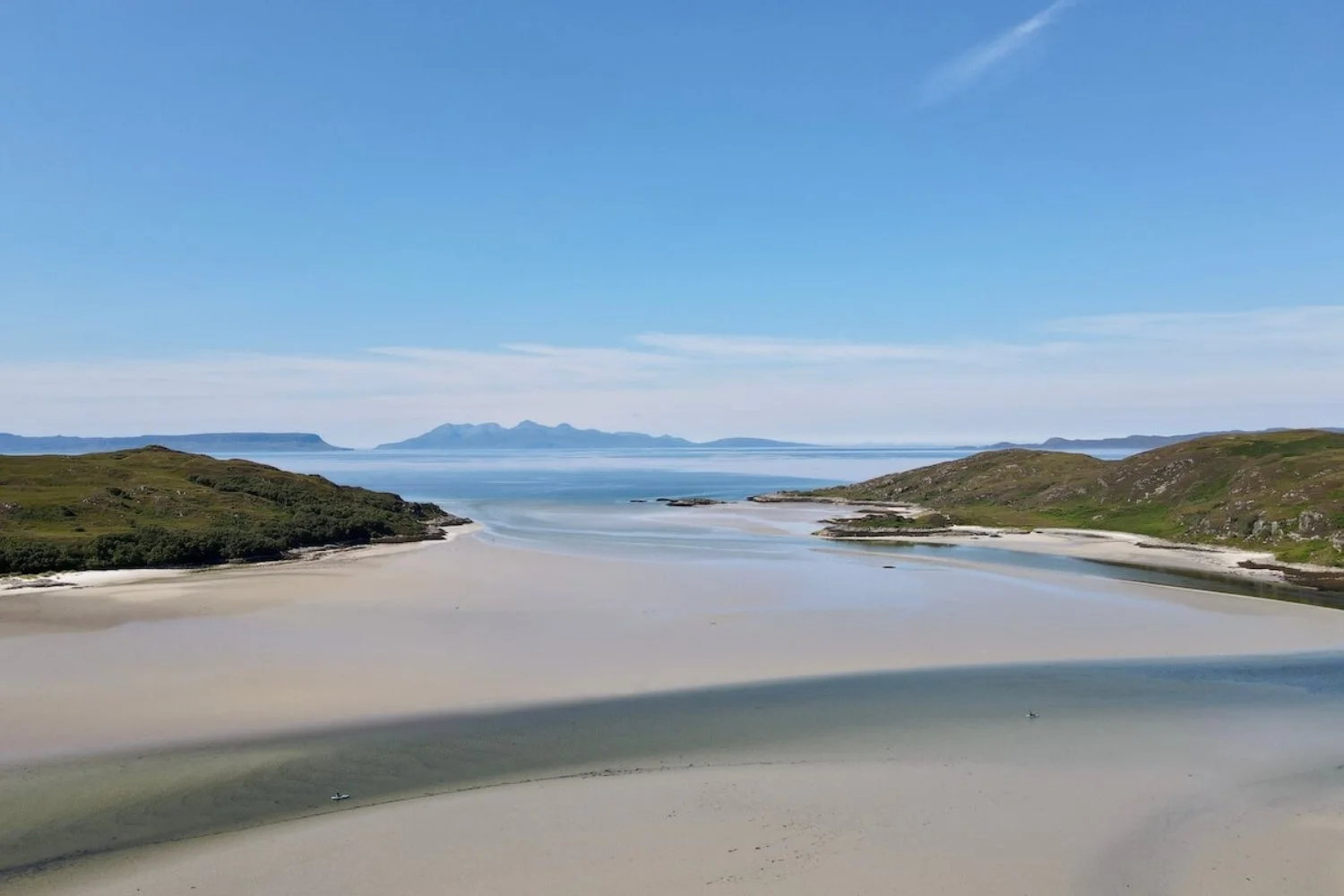
Silver Sands Arisaig
When we talk about resilience, we often picture someone gritting their teeth, battling the elements, and desperately trying to survive a crisis. We think of it as an emotional rescue mission.
But there is another kind of resilience. It is quiet. It is practical. It is the resilience of unshakable certainty. It’s the ability to look at a situation that would make most people’s hearts race, break it down into pure logic, and drop an anchor so deep that the emotional storm never even has a chance to develop.
Meet Daniel Collinge.
On paper, Daniel’s story sounds like a high-stakes financial thriller: a 52-year-old former Police Constable from the Scottish Highlands who went from being entirely debt-free to holding roughly £4 million in debt across a portfolio of 38 rental properties.
To the average bystander, that sounds like a recipe for sleepless nights. But if you sit down with Daniel, you quickly realize that his journey isn’t a story of reckless gambling—it is a masterclass in the Bio-Psycho-Social model of resilience, proving that true stability comes from taking control of your own horizon.
1. The Social Anchor: The Highlands and the Weight of a Cash Envelope
To understand Daniel’s psychology, you have to look at his roots (the Social pillar of his resilience). Born in Inverness and raised in Fort William, Daniel grew up surrounded by the old-fashioned, steady principles of the Scottish working class. His dad worked at the Corpach paper mill, his mum worked in local schools, and money was handled with strict discipline.
"If my parents wanted something, they saved for it. Simple as that," Daniel recalls. "You work for what you have. You earn it. You don’t just get it handed to you."
At 15, Daniel got his first taste of independence stacking shelves in a local supermarket. Every Friday afternoon, he was handed a small brown envelope with his wages in cash.
"That feeling… earning your own money… it does something to you," he says.
Admittedly, most of that cash was gone by Saturday, spent on four cans of Tennent's by the riverbank with mates. At 15, money was just a tool for immediate freedom. But a casual comment in his family living room was about to radically redefine what money, risk, and purpose actually meant.
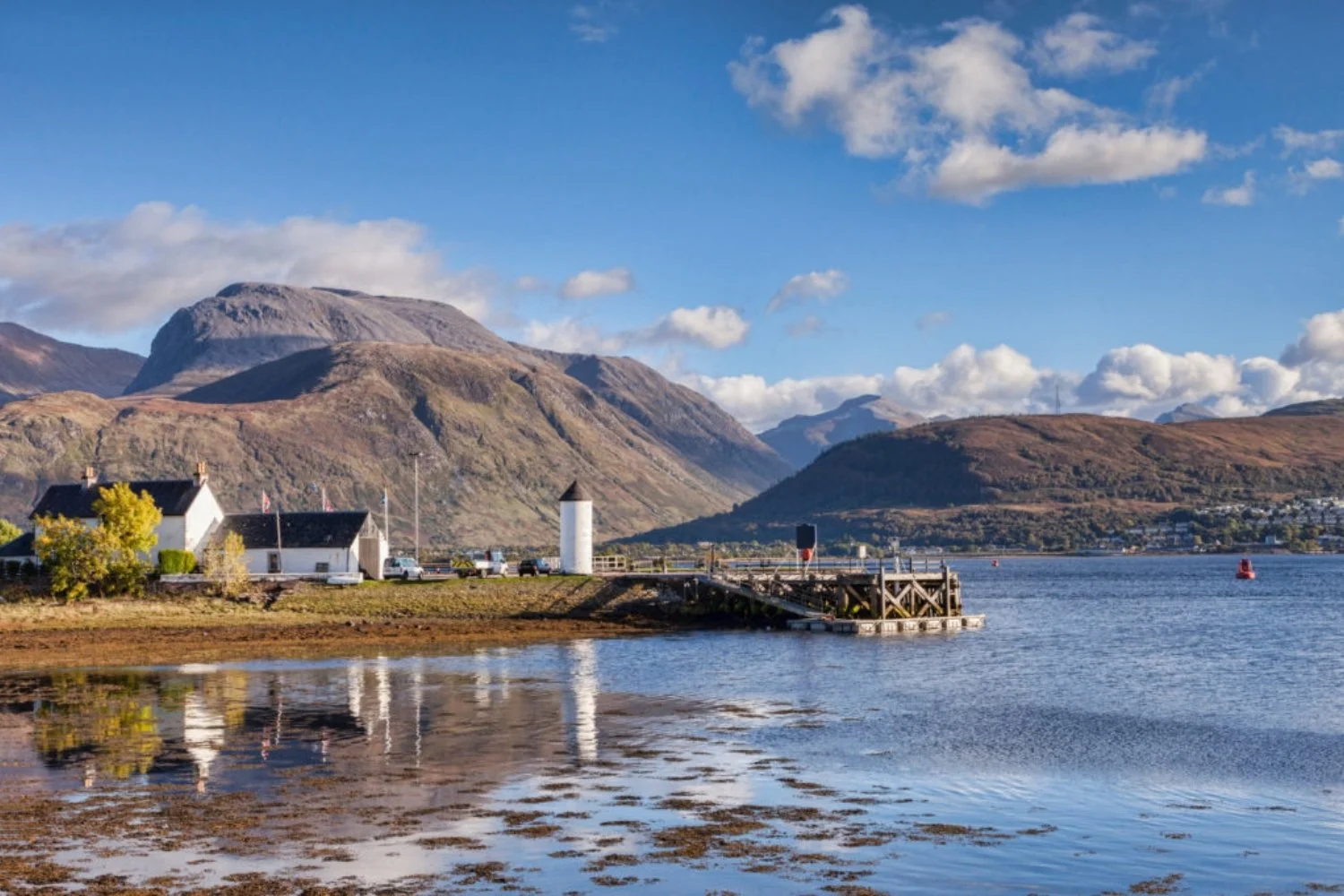
View of Ben Nevis from Corpach
2. The Horizon Expands: From Fort William to Kenya
A friend of Daniel's dad mentioned he was traveling to Kenya to visit two children he sponsored through a charity. On a whim, 15-year-old Daniel asked, "Can I come with you?" The answer was simple: if you can save for the airfare, you can go.
For the first time in his life, saving money had a profound purpose. This wasn't about the upcoming weekend anymore; it was about the wider world.
In 1988, long before the internet made travel seamless, Daniel found himself standing at a Fort William bus stop with a rucksack, embarking on an odyssey that felt like crossing half the globe: a bus to Glasgow, a bus to London, a flight to Heathrow, and an Aeroflot journey stitching through Moscow, Cyprus, and Yemen, before finally touching down in Nairobi.
What met him there was a profound shock to his nervous system.
"The poverty hit hard. Not something on a screen, but real. Right in front of you. Children with nothing... It was a shock to the system. The kind that stays with you."
But as the initial shock settled during a two-week stay in the rainforest village of Kakamega, it was replaced by something entirely unexpected: an overwhelming sense of gratitude and community.
People who had practically nothing welcomed them like heroes, sharing their warmth, their smiles, and their homes. It was a deeply humbling, eye-opening experience that quietly reshaped how Daniel saw the world and his place in it. He returned to Kenya four more times.
This early exposure to extreme poverty—juxtaposed with immense human kindness—anchored Daniel in a deep sense of baseline gratitude. It taught him a vital psychological lesson early in life: material lack does not mean a lack of human wealth, and true security is not something you passively wait for—it is something you actively build.
3. Finding the Motivation to Build "Something Bigger"
Returning to Scotland, Daniel's path wasn't a straight line. He worked a mix of eclectic jobs—labouring on the film set of Braveheart in Glen Nevis, cleaning and managing rental cars, and even spending a six-month stint in Jersey.
Then, he met Clare in a Glasgow nightclub, and the tides shifted completely.
For years, they navigated a gruelling long-distance relationship. Daniel would regularly finish his shifts in Fort William, drive hundreds of miles down the hazardous A82 just to see Clare for a few hours for dinner or a movie, and drive all the way back the same night.
When Clare finally travelled up north and realized the sheer distance he had been covering just to hold her hand, the reality set in. If this relationship was going to survive, Daniel needed to make a radical change. He needed to move to Glasgow, and he needed a career that could support a future family. He needed something bigger.

Clyde Arc Bridge, Glasgow.
In November 2000, he joined Strathclyde Police, embarking on a 22-year career as a street constable. The job gave him invaluable street-level resilience and allowed him to be fully present for his daughters' childhoods. But by the time he hit 35, having completely paid off his residential mortgage and filled up his ISAs, the old childhood lessons about money began to collide with a new reality.
4. The Psychological Shift: Redefining Risk and "Dead Money"
Most people look at a paid-off mortgage as the ultimate safety harbor. But true resilience requires us to constantly assess whether our "safe" path is actually keeping us stuck.
Influenced by his life experiences and foundational books like Rich Dad Poor Dad by Robert Kiyoaki,s Daniel realized that the equity tied up in his home was essentially "dead money." It was sitting idle while he traded his physical safety, time, and his life’s energy on the streets of Glasgow for a paycheck.
When he and Clare ran out of initial savings after buying their first four buy-to-let properties, they made the bold choice to refinance their family home, releasing £70,000 across two stages to fund more deposits.
When asked if he felt a physical wave of fear or a moment of panic about risking his own roof and taking on millions in debt, Daniel’s perspective reveals the absolute stability of a calculated mindset:
"No, it never really crossed my mind. We were in a strong financial position and carefully weighed up the pros and cons... For us, there was very little risk involved."
Where others see a terrifying storm of debt, Daniel sees the logic of supply and demand. In a country with a chronic housing shortage, there will always be demand for decent homes. By utilizing a conservative 75% loan-to-value ratio, a property’s value would have to plummet by a full 25% to enter negative equity—and a loss is only realized if you panic and sell during a market crash.
Ironically, as the portfolio scaled to new heights, Daniel’s sense of safety increased. By spreading the risk across dozens of tenanted front doors, a single vacancy became a minor ripple rather than a catastrophic event.
5. The Biological Reality: Reclaiming Time Over Burnout
Resilience is also deeply Biological. Our bodies carry the toll of our environments. In the police force, Daniel loved his work, but by his late 40s, the tax math became punitive. The Scottish tax system meant he was paying a staggering 42% on income earned above his police salary. He was working exhausting, high-stress shifts, only to hand nearly half of his extra earnings away.
He realized a profound truth: a full-time job isn't inherently safe. You can be injured, made redundant, or your employer can collapse.
True biological and emotional safety meant building an environment where he could earn money while sleeping, holidaying, or resting. By retiring from the force early at 49, he dropped back into a lower tax bracket and focused entirely on the portfolio he and Clare built together.
Daniel's Blueprint for Navigating Radical Life Changes
Daniel is the first to tell you he isn't special. He didn't have a perfect plan; he simply combined a fierce working-class work ethic with a refusal to be paralyzed by traditional ideas of risk. If you feel stuck between the false safety of your current life and the fear of making a bold move, here is his straightforward advice:
Don't Quit Your Day Job Too Soon: Stable employment is exactly what mortgage lenders want to see. Use your salary to build your foundation first. Daniel spent years renovating properties before and after his police shifts.
Ignore the Online "Gurus": Avoid the flashy "get rich quick" noise on social media. True success takes hard work, consistency, due diligence, and motivation—not expensive, hollow courses.
Seek Real Human Connection: Attend local networking events. Speak face-to-face with people who have actually achieved the tangible, long-term results you want to see.
Drop Your Own Anchor
Daniel’s journey from stacking supermarket shelves to managing a multi-million pound property portfolio shows us that finding your calm doesn't mean waiting for the ocean of life to be perfectly still. It means constructing a personal system—an anchor—that keeps you grounded regardless of which way the wind blows.

⚓ Want to learn more?
